Description
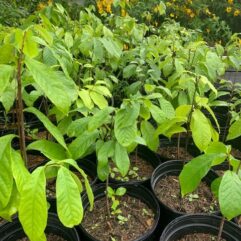
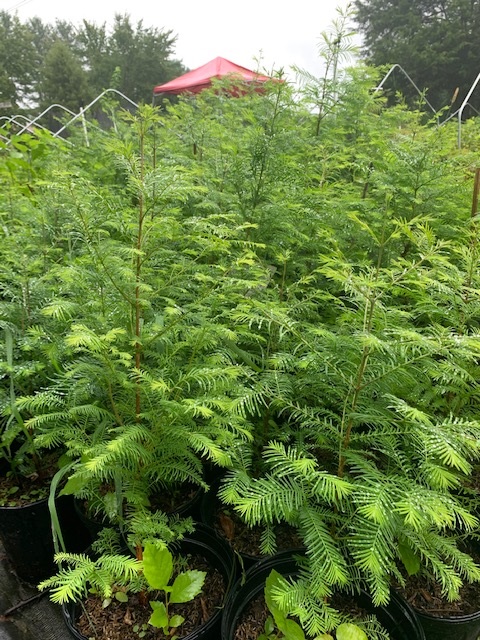
Dawn Redwood (Metasequoia glyptostroboides) organic 2 gal potted tree.
Dawn Redwood is a tree that is know as a living fossil. Thought to have gone extinct millions of years ago (it’s native range was the entire Northern hemisphere), it was “discovered” in 1944 by Chinese botanist Wang Zhan in what is now the Sichuan and Hubei provinces. Here was found a remote and isolated population that had persisted outside human depredation. Known as Shui-sa (“water fir”) by the local inhabitants, scientists could not find that it was a know species. It was finally connected to it’s fossil identity in 1946 by a professor at the Beijing Botanical Institute, and thus received it’s botanical name Metasequoia glyptostroboides. The original area is now a preserve, and seedlings have been distributed across the globe, ensuring the survival of this once widespread genus. Interestingly, the Dawn Redwood is well adapted to today’s climates across the northern hemisphere, and is also very tolerant to the air pollution that is negatively affecting other modern trees and forests.
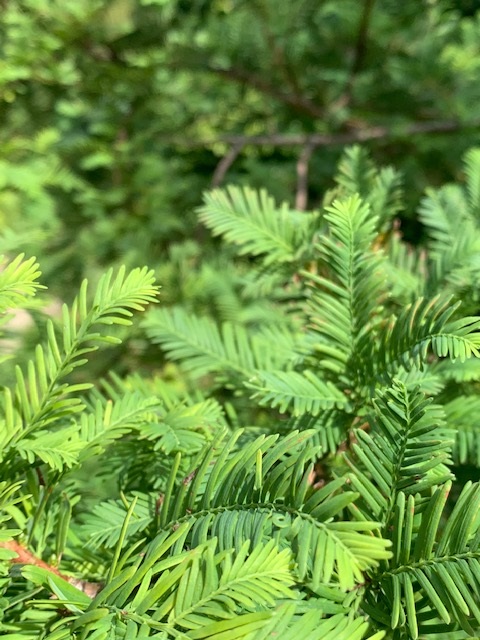
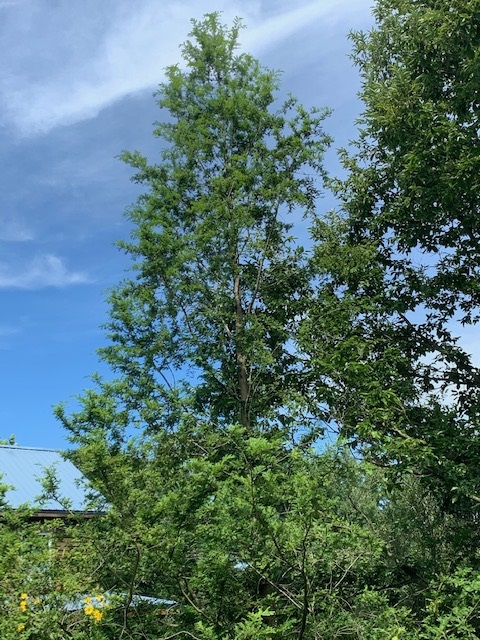
This isn’t a berry plant, but it is a plant dear to my botanical heart. I sold many of these trees during my time at the local farm markets, and people still check in with me to relate how tall and magnificent their dawn redwoods have become. This tree gets to about 60′ tall and maybe 30′ wide at the base (for a decades old tree), and is a narrow conifer with open and lacey texture. It is also deciduous like a bald cypress, with needles turning a bronzed russet after frost. Capable of growing in both mesic and dryer sites, it is very accommodating and not fussy at all.
Late freezes can be an issue for it, but our valley is renowned for late freezes and they survived the May 9, 2020 freeze here with little damage. This is a nice tree that fits into smaller lots, and offers a very different texture and appearance. It is very sightly with snow draping its bare branches in winter, and birds seem to love nesting and sitting in it.
Recommended in USDA growing zones 4-8.